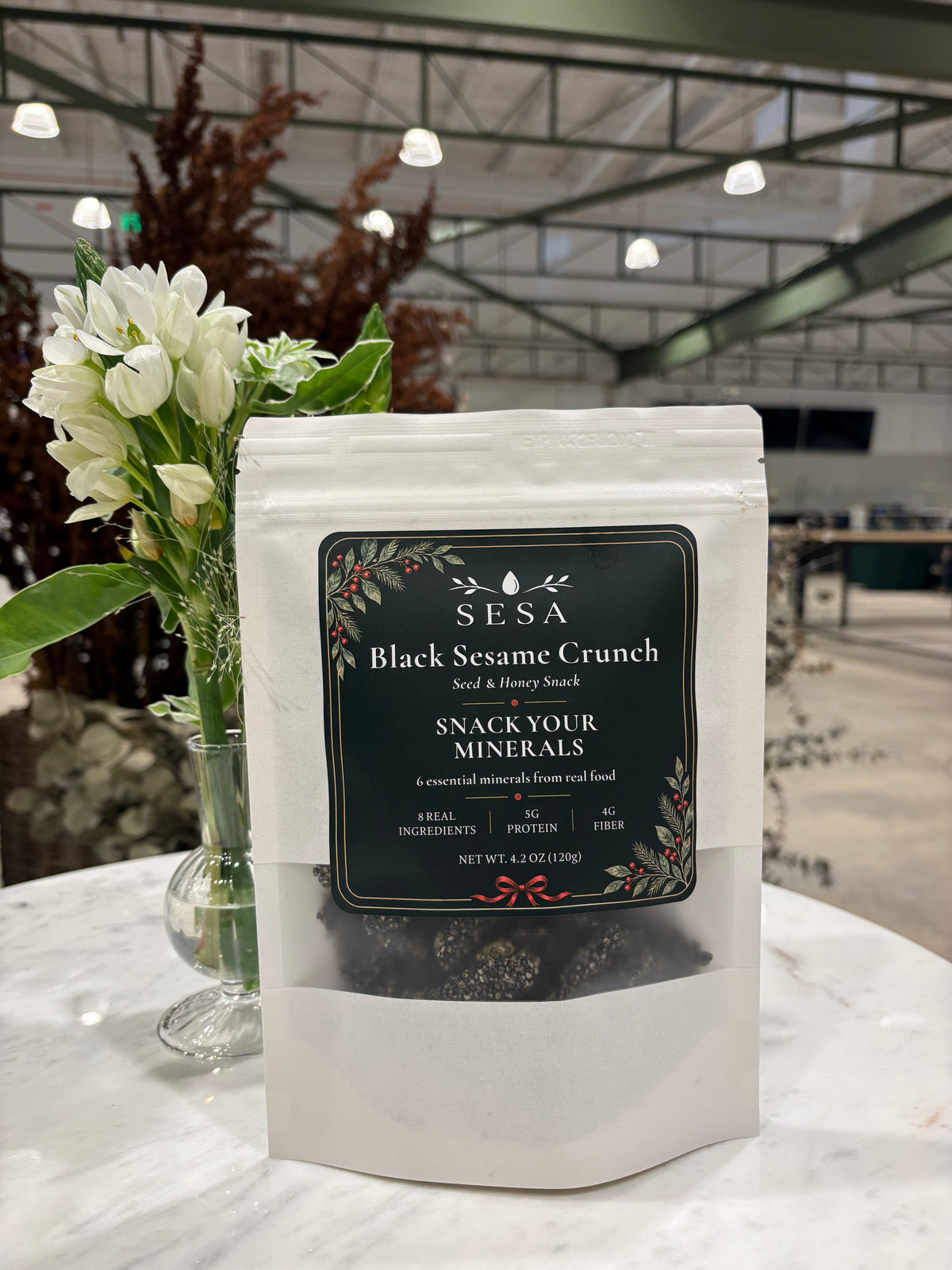
Black sesame doesn't need an origin story. It has one.

Centuries across Asia — ground into pastes, stirred into porridges. Not a superfood. A real food that has long been associated with health and wellness.

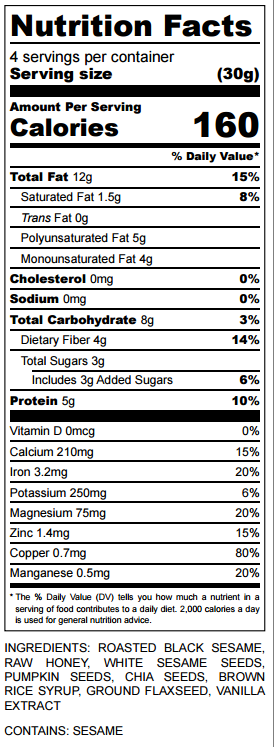
  • 80% Copper DV

    The standout mineral

    80% DV per serving. Supports iron metabolism and collagen — from whole seeds.

  • 20% Magnesium DV

    Energy + function

    Supports hundreds of metabolic reactions. Black sesame and pumpkin seeds are among the richest food sources.

  • 20% Iron DV

    Energy and vitality

    A mineral most women fall short on — from seeds, not a supplement.

  • 20% Manganese DV

    Antioxidant support

    Black sesame is one of the richest natural food sources.

  • 15% Zinc DV

    Cell growth + immune function

    Associated with hair health in nutritional research.*

  • 15% Calcium DV

    Bones + muscle

    From seeds, not dairy.

  • 5g Protein

    Sustained energy

    Whole-seed protein — amino acids, minerals, and fiber intact.

  • 4g Fiber

    Digestion + satiety

    As much fiber as a bowl of oatmeal.

1 of 8

A PhD food scientist built this. Here's why that matters.


I grew up in China eating black sesame — it wasn't called a superfood, it was just food. Years later, on rushed mornings, I was literally stirring it into yogurt before running out the door. Eventually I thought: why isn't this just a snack? That question became SESA.

— Wendy Zhang, PhD, Founder

Our Story
  • Our Story

    Why a food scientist built SESA

    Our Story 
  • Black Sesame

    SESA's hero ingredient, the tradition and science behind it

    Black Sesame 
  • FAQ

    Product, nutrition, storage, and more

    Read more 
  • The Science

    Mineral education and the food science behind black sesame

    Read more