Fiber Diversity: Why Five Seeds Beat One
By Wendy Zhang · Founder, SESAShare
By Wendy Zhang, founder of SESA
"Fibermaxxing" — pushing your daily fiber as high as possible — had its moment on social media. For 2026, the conversation is shifting. Market researcher Mintel describes the move as going "from maximization to balance": less about one big number, more about eating a variety of fiber-rich foods. Here's why that shift makes sense, and how to put it into practice.
First, most of us still don't eat enough
The Daily Value for fiber on U.S. food labels is 28g a day, and most Americans fall short of it. So getting more fiber is still worthwhile. The question is how.
Why variety matters
"Fiber" isn't one thing. Different plant foods contain different types of fiber — some dissolve in water and form a gel, others add bulk — along with different natural plant compounds. Eating from many sources gives you a broader mix than relying on a single fiber supplement or one "hero" food.
Research points the same way. In the American Gut Project, a large citizen-science study published in 2018, people who ate more than 30 different types of plants a week had more diverse gut microbes than people who ate 10 or fewer. Seeds, nuts, herbs and spices all count toward that number.
Easy ways to add more kinds of fiber
- Count plants, not grams. Aim to add one new plant food to your week, every week.
- Use mixes. Mixed beans, mixed greens, mixed seeds and multigrain foods add several plants at once.
- Sprinkle seeds. Chia, flax, pumpkin and sesame seeds are easy to add to yogurt, oatmeal, salads and smoothies.
- Go slowly. If you're increasing fiber, do it gradually and drink plenty of water.
Why SESA uses five seeds
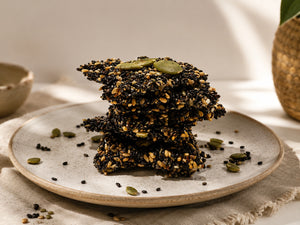
SESA Black Sesame Crunch is built on five different seeds: black sesame, white sesame, pumpkin seeds, chia and ground flaxseed. That's five plant types in one snack. Each 30g serving provides 4g of fiber (14% DV), along with 5g of protein and six essential minerals — bound together only with raw honey and brown rice syrup, with no added fiber isolates.
FAQ
What is fiber diversity?
Fiber diversity means getting fiber from many different plant foods, rather than focusing only on the total number of grams.
How much fiber should women eat?
The Daily Value used on food labels is 28g of fiber a day. Individual needs vary with age and calorie intake.
Do seeds count toward plant diversity?
Yes. Each different seed counts as its own plant type, which makes seed mixes an easy way to add variety.
Sources: Mintel 2026 global food and drink predictions (via NutraIngredients, Oct 2025); McDonald et al., "American Gut: an Open Platform for Citizen Science Microbiome Research," mSystems, 2018; FDA Daily Values.